Multi-Level Video Storytelling
Brave Day works across education, health, arts and culture - often at their intersections.
Projects typically combine storytelling strategy, creative co-design, training and production coordination, shaped by context rather than sector.
Clients and Partners include:
NHS Greater Manchester / Greater Manchester Integrated Care Partnership`
Greater Manchester Combined Partnership
Manchester Metropolitan University
A Brilliant Thing CIC
Breaking Barriers CIC (Rochdale)
BBC Learning and Open University
BBC Arts and Radio - Contains Strong Language Festival
RFK UK Human Rights Foundation
Action Together
Pendle West Primary Care Network
The Roots Programme
In-Situ
Cartwheel Arts
Independent artists and facilitators
See the Portfolio page to view more Brave Day multimedia production content.
Case Studies:
Three examples of how Brave Day works
These case studies offer a snapshot of how Brave Day uses storytelling to support learning, reflection, and change.
Case Study 1 - GMCA & NHS Greater Manchester Live Well Communities Fund: Multi-layered storytelling for learning, evaluation, and change
Case Study 2 - NHS Greater Manchester: Campaign films and video storytelling skills-building for sustainable digital communications
Case Study 3 - Manchester Metropolitan University: Campaign films and video storytelling skills-building for sustainable digital communications
They focus on both process and outcome - showing how projects are co-designed, how collaboration works in practice, and how storytelling can help people and organisations make sense of what matters.
Case Study 1 -
GMCA & NHS Greater Manchester Live Well Communities Fund
Multi-layered storytelling for learning, evaluation, and change
This is a current live project, starting July 2025 - completion March 2026
Project overview
Brave Day was commissioned by Greater Manchester Combined Authority (GMCA) and NHS Greater Manchester, working in partnership with A Brilliant Thing CIC, to design and coordinate a multi-layered storytelling approach for the £1m Live Well Communities Fund.
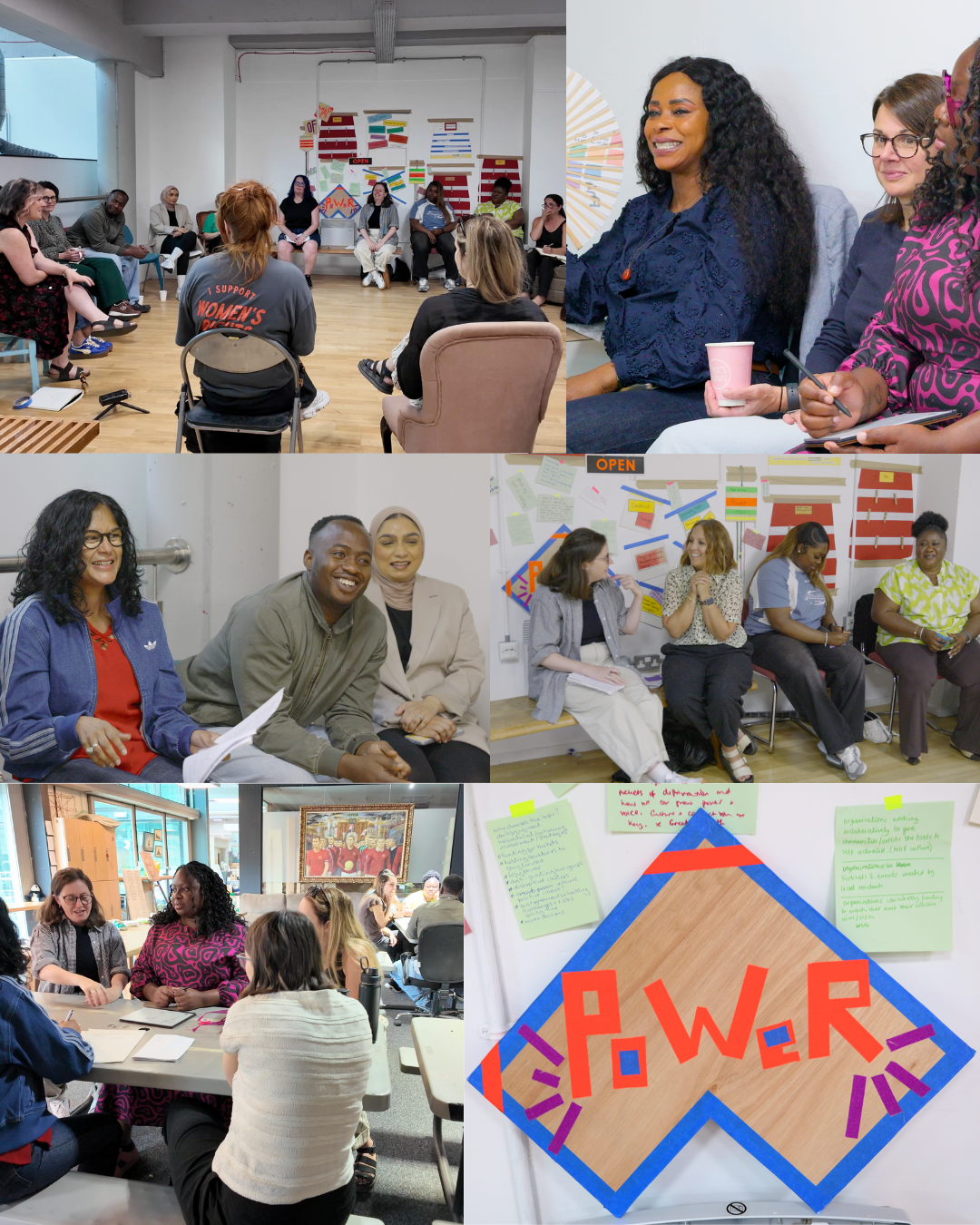
The Live Well Fund is an ambitious programme that places decision-making power directly in the hands of communities across Greater Manchester, enabling local groups to decide how health and wellbeing funding is best used in their area. Rather than prescribing solutions, the programme centres lived experience, local knowledge, and community-led change.
The storytelling challenge was not to produce a single, polished narrative but to document and make sense of a complex, evolving process while supporting learning, reflection, and evaluation across multiple stakeholders.
The challenge: telling a story that isn’t finished
When working with changemakers, community groups, and public services, the question “What’s the story?” is often a question of which layers of the story to tell and when.
This project involved:
multiple boroughs and communities
different stages of delivery and learning
diverse voices, priorities, and experiences
an ongoing process rather than a fixed outcome
The risk with traditional storytelling approaches is oversimplification - reducing complex social change to a single headline or success story. The aim here was to honour complexity without overwhelming, and to create resources for learning, reflection, and future decision-making.
Brave Day’s role
Brave Day worked as video coordinator, holding the overall storytelling strategy while collaborating closely with partners and contributors.
The role included:
co-designing the storytelling approach with A Brilliant Thing CIC
shaping a multi-layered narrative framework across films
coordinating contributions from community researchers and local filmmakers
balancing strategic oversight with hands-on filmmaking
ensuring the work was ethically held, inclusive, and accessible
We worked in close collaboration with Kerry Tottingham (A Brilliant Thing CIC), community researchers in each of the ten GM boroughs, local organisations, and co-producer Nika Muthra-Shah - bringing together professional production practice and lived experience.
A co-designed storytelling approach
In a project like this, storytelling is not about finding one neat answer. Instead, the approach focused on:
listening deeply to people with lived experience
creating space for multiple perspectives without forcing consensus
holding both hope and challenge within the narrative
connecting big-picture themes with small, human stories
allowing the story to remain open and evolving
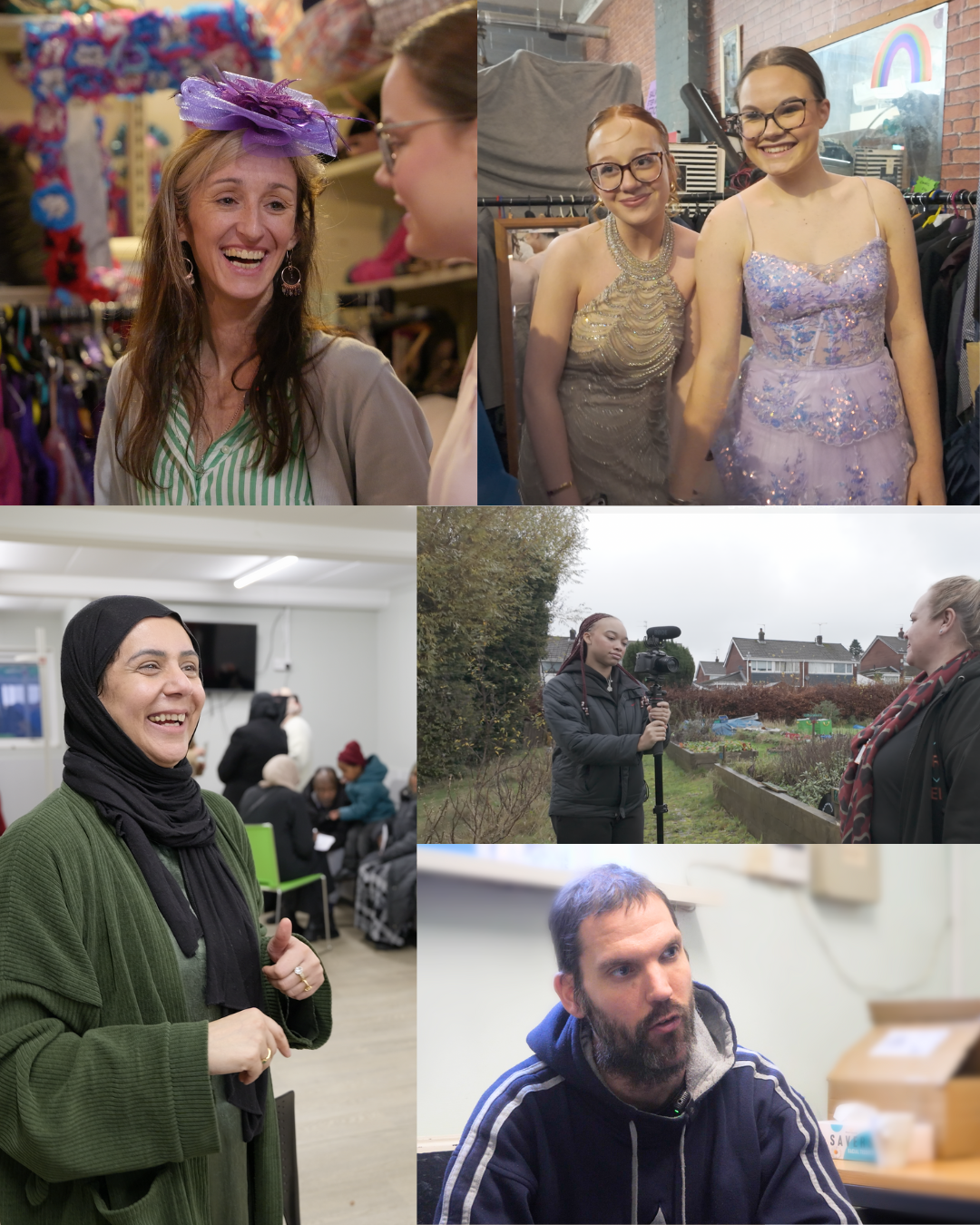
Community researchers were recruited across all ten GM boroughs to gather insights into how funding was being used in innovative and transformative ways. These insights shaped both the films' themes and the wider learning framework.
What was created
The project outputs were designed to support learning and evaluation, not just promotion.
Together, we are producing:
A short promotional film highlighting the Live Well Communities Fund's impact through the GM Mayor’s Charity, the fund’s new partner and collaborator with the aim of attracting business and philanthropic investment - see video.
A short documentary film
Capturing the overarching journey of the Live Well Fund - suitable for events, presentations, and online use.Five short case study films
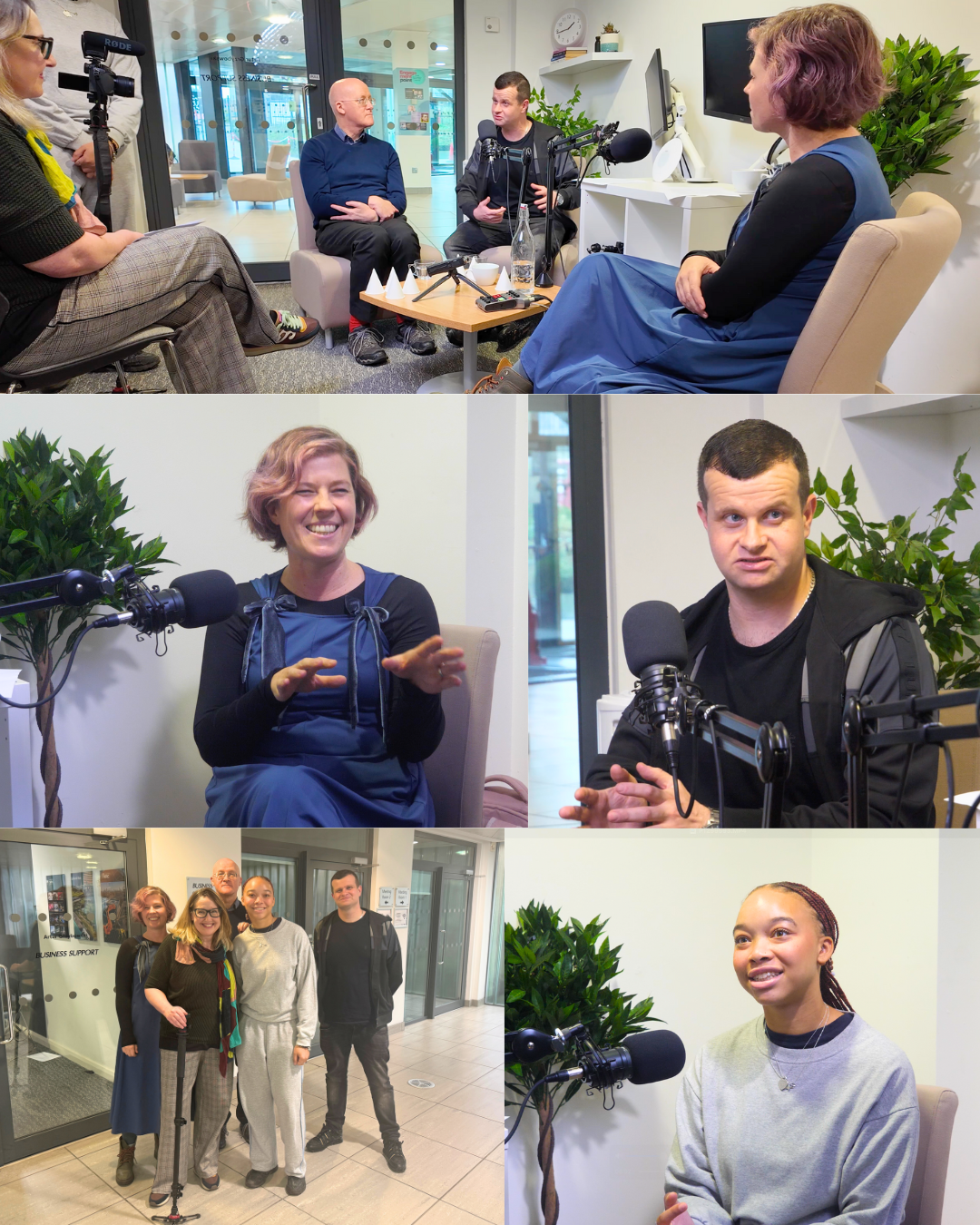
Each focuses on a specific theme emerging from the research, bringing the learning pack to life through lived experience.Podcast episodes - discussing behind-the-scenes of the approach to gathering research by the Community Researchers and Filmmakers.
These films form part of a wider evaluation and learning pack to be shared with Local Infrastructure Organisations (LIOs), supporting reflection on what’s working, what’s challenging, and how to strengthen community-led approaches.
Why this approach mattered
By using a multi-layered storytelling approach, the work:
supported learning rather than closing down interpretation
reflected the realities of community-led change
avoided extractive or overly polished narratives
created resources that could be returned to over time
strengthened collaboration between public bodies and communities
The films act not as final answers, but as conversation starters - supporting ongoing sense-making across the system.
Case Study 2
NHS Greater Manchester
Campaign films and video storytelling skills-building for sustainable digital communications
Project overview
Brave Day has worked with NHS Greater Manchester across multiple projects, supporting both public-facing storytelling and internal capacity-building within digital and communications teams.
This ongoing relationship reflects a shared aim: to create clear, accessible communication for the public, while also building confidence and capability within teams to produce digital content more sustainably over time.
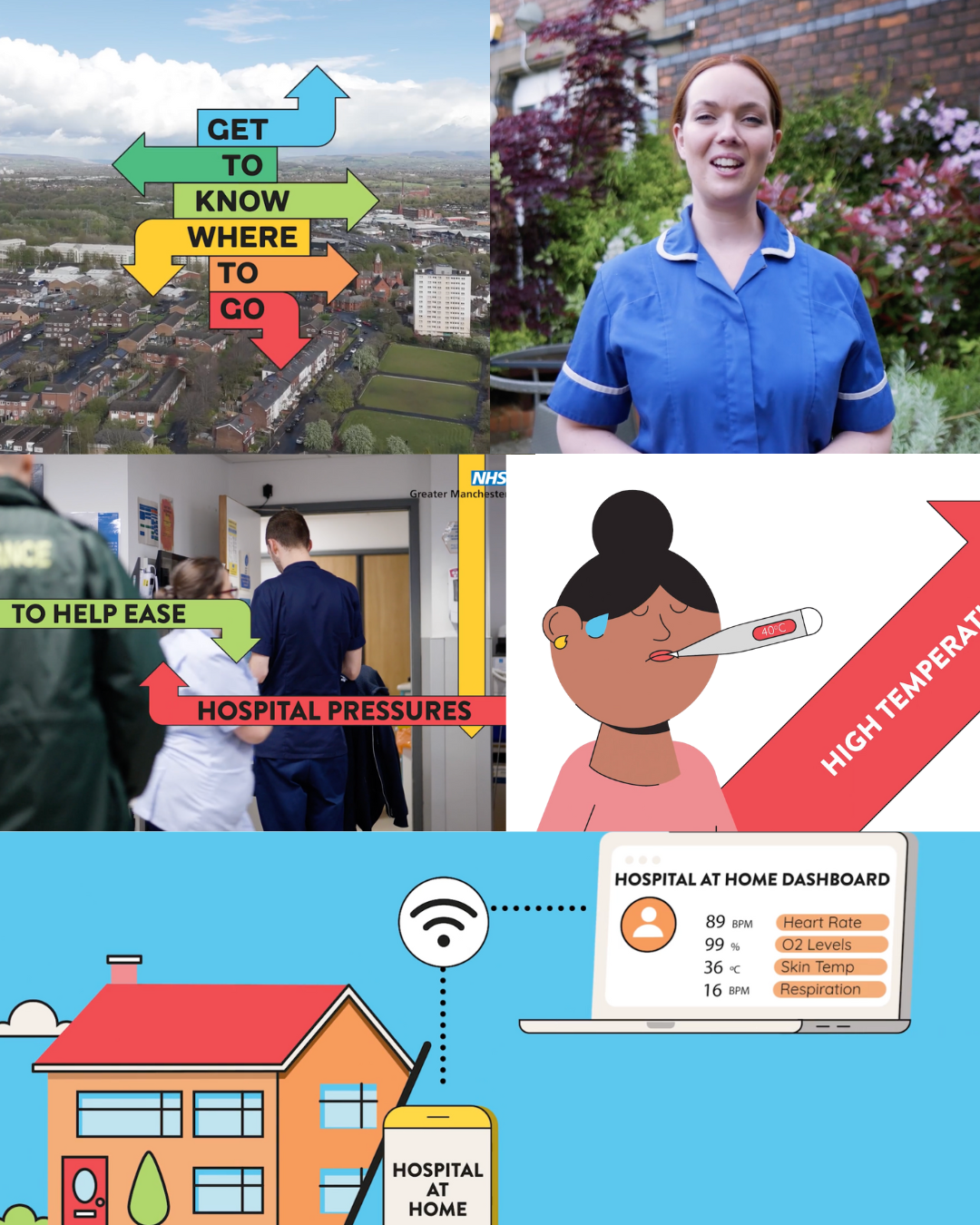
Project 1: Get To Know Where To Go campaign film
NHS Greater Manchester commissioned Brave Day to create a campaign film to help the public better understand where to go for treatment or urgent care, with the wider goal of reducing pressure on hospitals.
Working closely with the NHS GM Digital team, Brave Day supported the development of the script and narrative structure, ensuring multiple services and scenarios could be included without overwhelming audiences.
The film also needed to sit seamlessly within an existing campaign, adapting NHS GM’s established branding into new animated elements. Motion graphics were developed in collaboration with animator Nat Wood.
Brave Day:
filmed and edited the 5-minute hero film
delivered multiple shorter edits for social media
ensured clarity, tone, and accessibility across all outputs
The hero film was shared via the NHS GM website and YouTube, with shorter clips supporting social and digital channels.
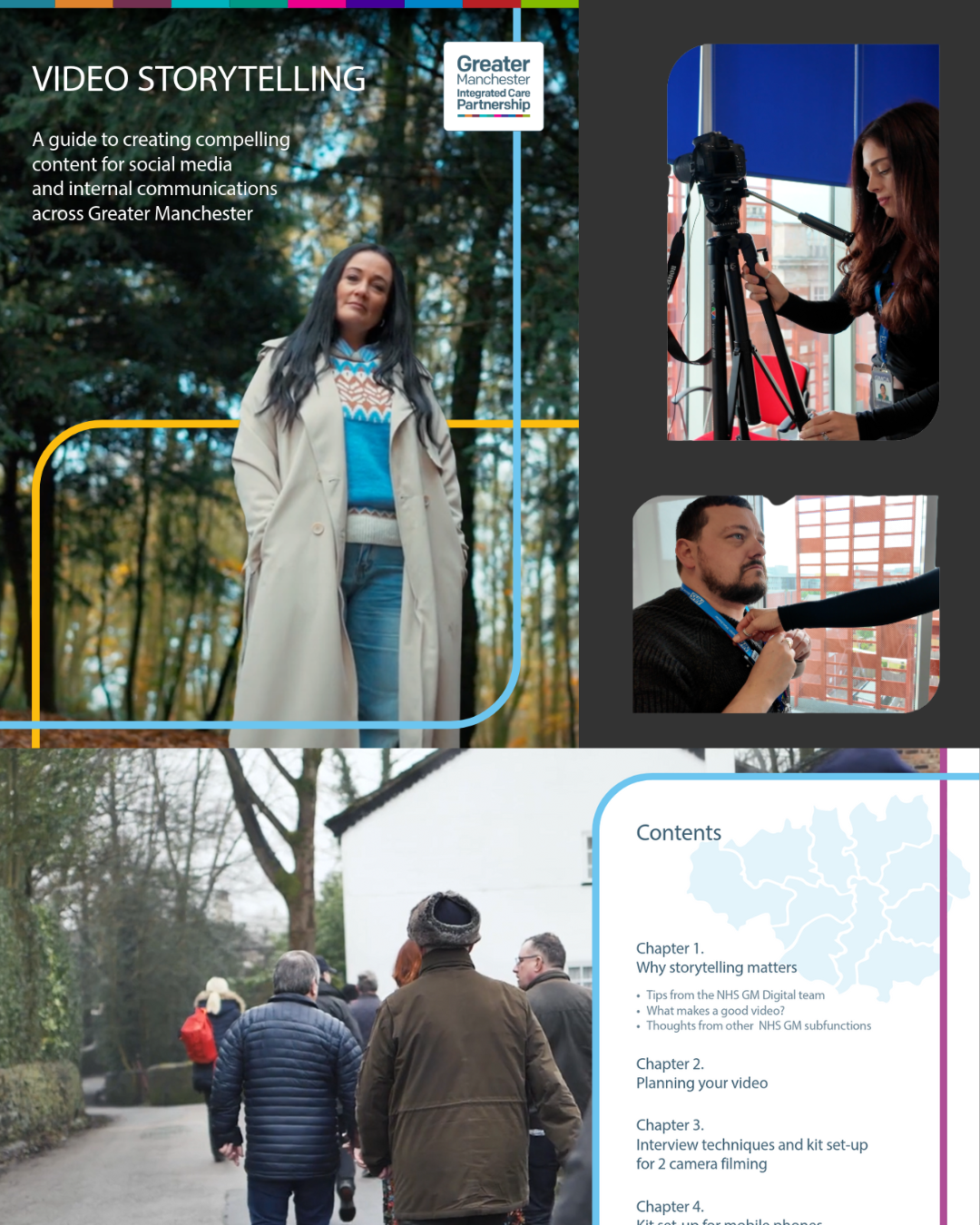
Project 2: Building internal video storytelling skills and confidence
Following the campaign, NHS Greater Manchester identified a growing need to upskill teams across Digital, Design, Engagement, and Media Communications — enabling staff to create short-form video content for both external campaigns and internal communications.
While Brave Day had previously delivered in-person video skills workshops, the organisation was now looking for a more sustainable, shareable learning resource that could support both existing and new team members across all Greater Manchester localities.
Working collaboratively, we:
co-designed the concept and structure of a multimedia learning e-book
shaped the content around storytelling, confidence, and practical decision-making
created clear checklists and short videos covering each stage of production
focused on accessible, low-barrier filming and editing techniques
The resource supports staff to understand when and why to create their own content, how it sits alongside professionally produced work, and how to plan, film, and edit using simple tools and workflows.
Why this approach mattered
Together, these projects demonstrate a joined-up approach to storytelling and learning - combining high-quality campaign delivery with longer-term skills development.
Rather than relying solely on external production, NHS GM teams were supported to:
feel more confident using digital media
make informed storytelling decisions
produce engaging content across platforms
embed learning that could be shared and revisited over time
“Brave Day were great to work with from start to finish. We were really happy with the end product, and our communications and engagement team felt more confident producing high-quality, engaging content across multiple platforms.”
Jessica Herbert
Head of Campaigns, Digital and Design — NHS Greater Manchester
Case Study 3
Manchester Metropolitan University - 200 Years of Creative Excellence
Co-designed storytelling to celebrate the 200-year anniversary of Manchester School of Art
Project overview
As part of Manchester Metropolitan University’s 200th anniversary celebrations, Brave Day was commissioned to co-design and produce a series of short films celebrating the University’s long-standing influence on creativity, innovation, and social change.
The work sat within a year-long campaign focused not only on heritage but also on how Manchester Met continues to drive positive change across creative industries, graduate employment, and community life, with Creative Excellence as a central theme.
Rather than a traditional promotional film, the brief called for beautiful, artistic storytelling that would surprise audiences and reflect the University’s role in shaping creativity in Manchester and beyond
The challenge
Manchester Met wanted to:
bring nearly 200 years of creative heritage to life
foreground innovation while honouring context and history
avoid a corporate tone in favour of something inspiring and human
create films suitable for digital platforms and long-term use
This required a careful balance between institutional aims and authentic creative voice, particularly when working with high-profile alumni and partners.
Brave Day’s role
Brave Day worked as creative co-designer and lead filmmaker, collaborating closely with the University’s marketing team to shape the storytelling approach.
Our role included:
interpreting the campaign brief into a clear narrative framework
co-designing story angles with contributors
leading filming and post-production
ensuring the films aligned with campaign goals while retaining creative integrity
The work required a senior-led, relational approach, particularly when filming with well-known artists, alumni, and industry leaders, and when translating complex institutional themes into accessible, engaging stories.
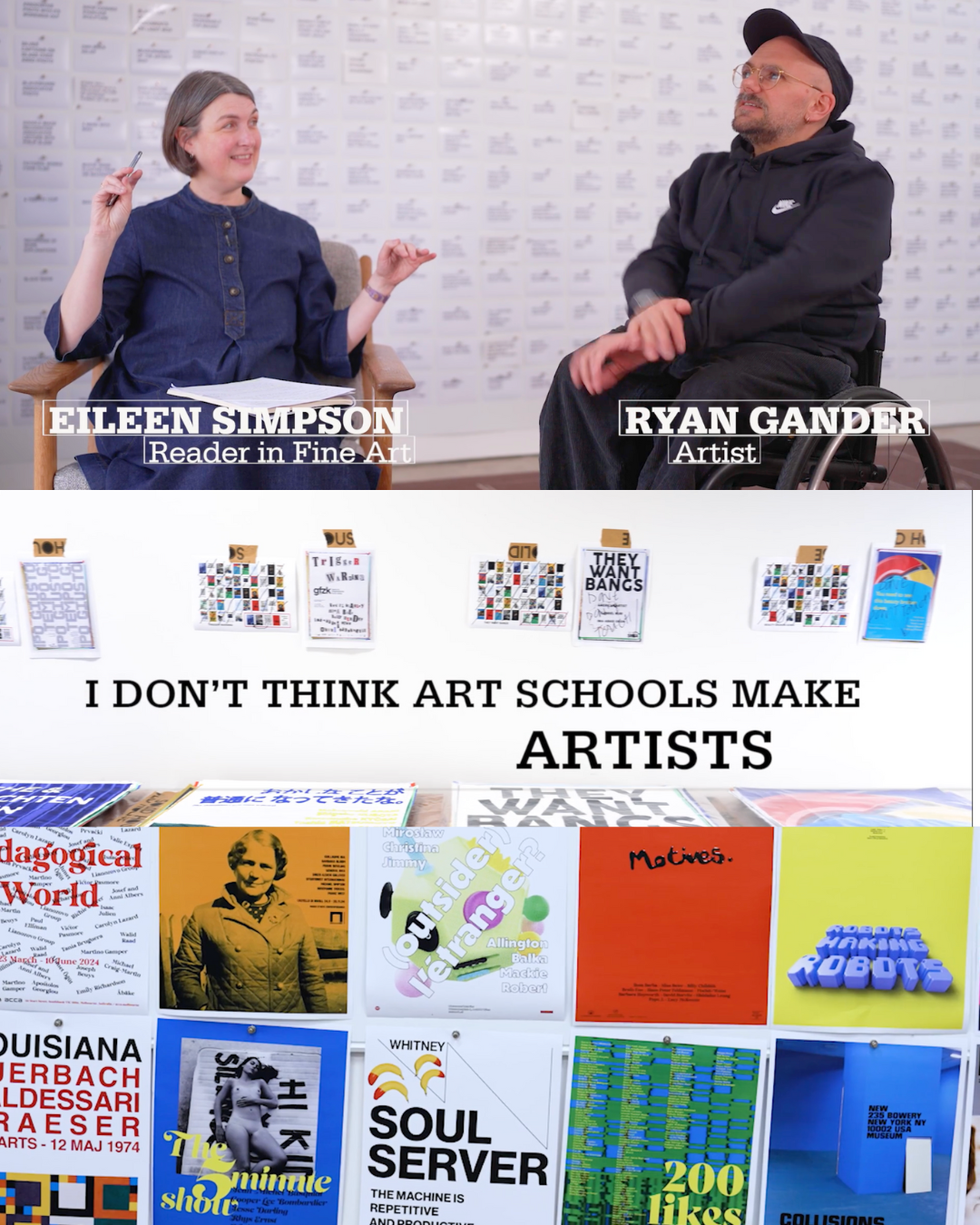
Ryan Gander interview for Manchester Metropolitan University 200 Years of Creative Excellence
The films
Three short films were created, each exploring a different dimension of Manchester Met’s creative impact:
Ryan Gander OBE RA
A highly influential British conceptual artist, Ryan reflects on why everyone should go to art school for at least one year, positioning creativity as a way of thinking, not just a profession. Filmed at his studio in Suffolk, this film became the most-viewed reel on Manchester School of Art’s social media channels.Simon Rutter
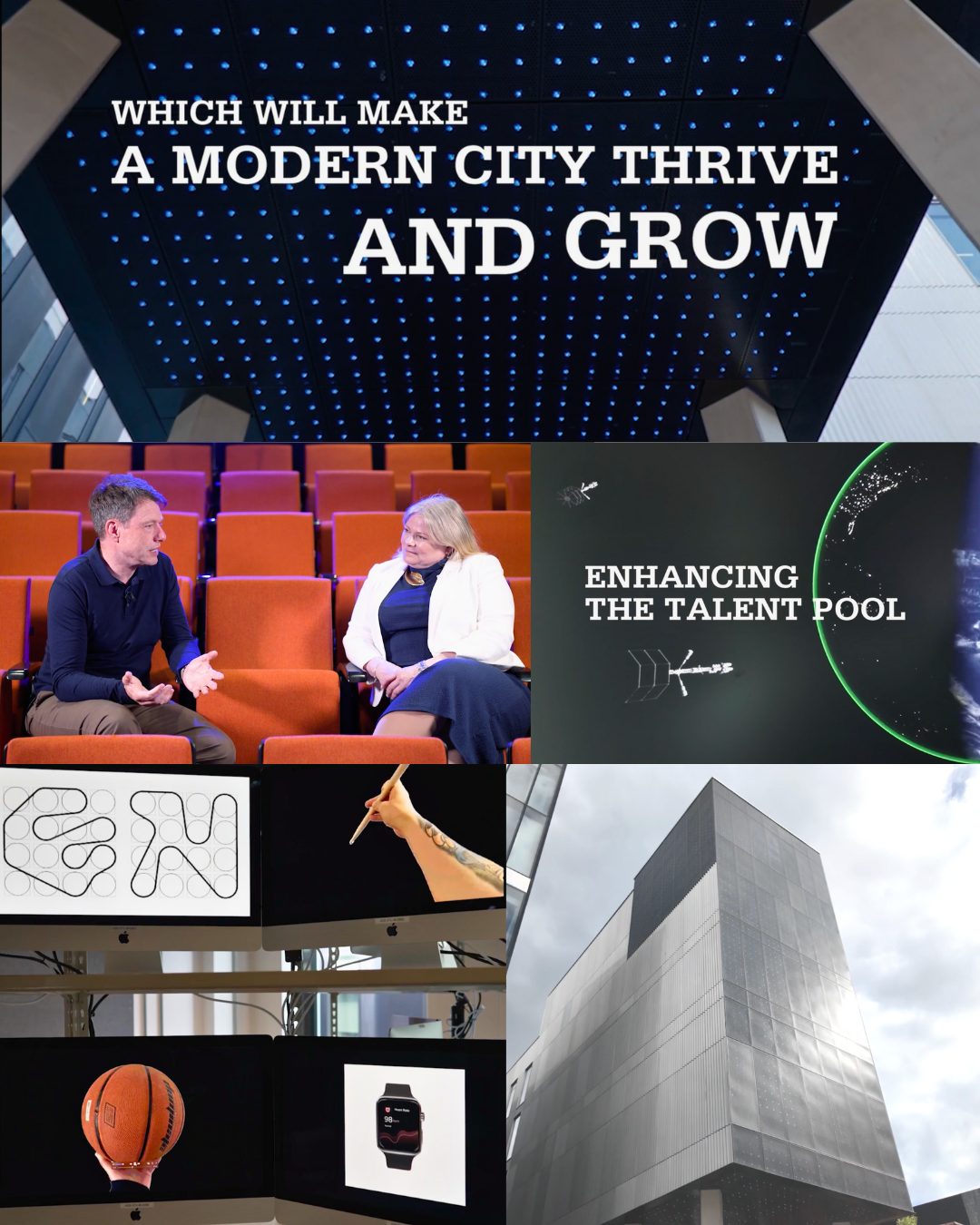
Former Head of Sony PlayStation Europe and Manchester Met alumnus, Simon reflects on the role of creative digital arts in shaping the future — connecting education, industry, and innovation.Alice Kettle & Ibukun Baldwin
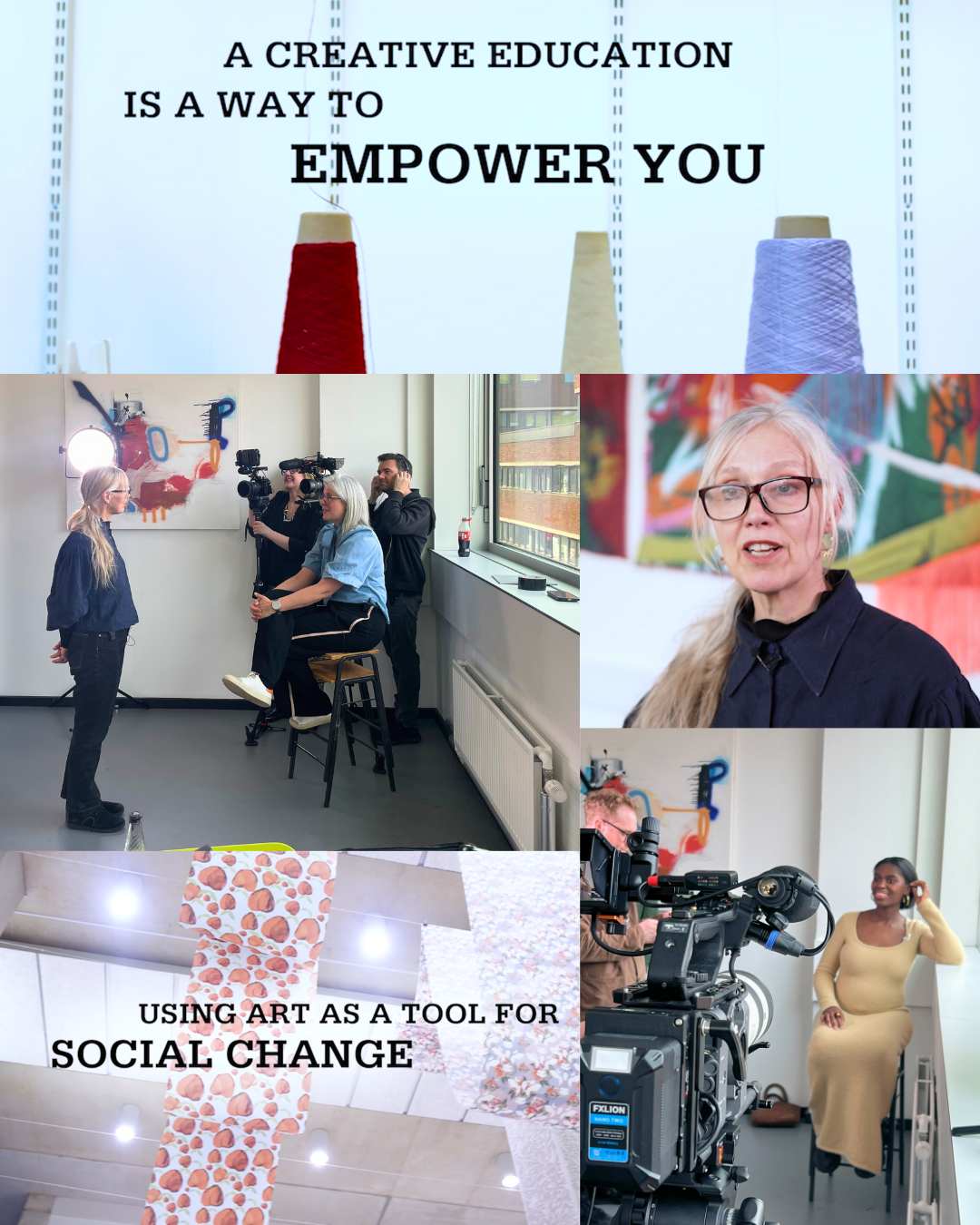
Textile artist and Professor Alice Kettle and multidisciplinary artist Ibukun Baldwin explore the role of art in healing, mentorship, and social change - highlighting creativity as a force for connection, resilience, and activism.
Across the films, shared themes emerged: creative excellence, opportunity, mentorship, innovation, and creativity as a driver of social good — closely reflecting the campaign’s wider aims
Simon Rutter interview for Manchester Metropolitan University 200 Years of Creative Excellence
Alice Kettle and Ibukun Baldwin interview for Manchester Metropolitan University 200 Years of Creative Excellence
Why this approach mattered
By resisting a single promotional narrative and instead co-designing a set of human, values-led stories, the films:
felt authentic rather than corporate
balanced heritage with forward-looking innovation
showcased creativity as a living, evolving practice
invited audiences to see themselves as part of Manchester Met’s future story
The films were used across digital channels to launch the Creative Excellence campaign and continue to support promotion of the University’s creative offer.
“We love working with Brave Day and have produced several films with them for high-profile campaigns.
During filming, they are a team you can trust with high level stakeholders and to be professional and creative in their approach.
There is also an attention to detail and creativity in the editing process that I’ve not experienced with many other filmmakers. They really get to grips with a brief and think in depth about how the finished film will meet your aims and objectives.”
Pete Jones
Marketing Manager — Manchester Metropolitan University
Selected video production work
Alongside the case studies featured here, Brave Day has delivered a wide range of multimedia storytelling projects over the past two years.
A selection of recent films — including campaign pieces, learning resources, and community-centred storytelling — can be viewed in the production portfolio.